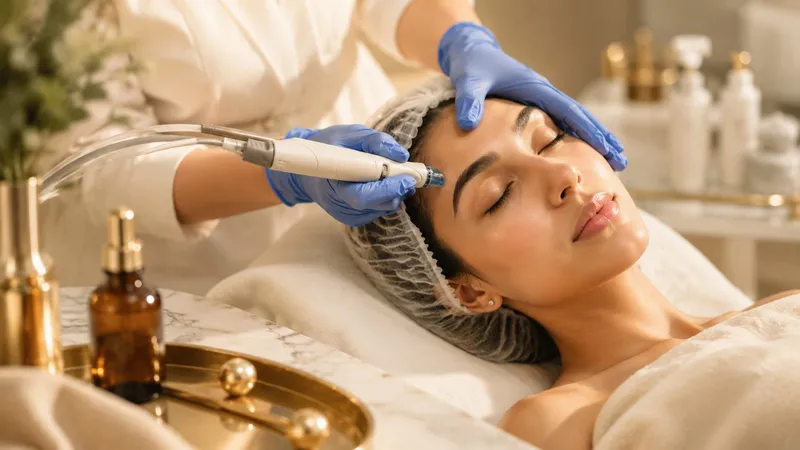
HIFU uses focused ultrasound to tighten skin from within, targeting the same SMAS layer surgeons lift during a facelift. Dr. Pinky Nisha explains how it works, who benefits, and what results to realistically expect.
HIFU (High-Intensity Focused Ultrasound) tightens skin by delivering focused ultrasound energy to depths of 1.5mm, 3mm and 4.5mm, including the SMAS layer targeted in surgical facelifts, stimulating new collagen. It suits mild to moderate sagging in adults aged 30-60, gives gradual results over 2-3 months lasting 12-18 months, and requires no cuts or downtime.
Not every patient who wants a firmer jawline or tighter neck is ready for surgery, and many should not need it. HIFU, or High-Intensity Focused Ultrasound, has become one of the most requested non-surgical procedures at Skin Solution Clinic on Nainital Road, Bareilly, precisely because it targets the same deep support layer that a surgical facelift addresses, without any incision. Patients often arrive with a vague idea gathered from social media that HIFU is either a miracle cure or a scam, and the truth sits firmly in between: it is a genuine, evidence-based technology with realistic, gradual results when used on the right candidate, and it has clear limits that an honest dermatologist should explain before treatment. This guide covers exactly how the energy works at each depth, who should and should not consider it, what an actual session feels like, how results build up and how long they last, how it compares with other tightening options such as threads and fillers, safety specifically for Indian skin, and what it costs to plan for in Bareilly.
How focused ultrasound energy works
HIFU devices deliver ultrasound energy that is focused, much like a magnifying glass focuses sunlight, to a very precise point beneath the skin's surface without heating the layers above it. At that focal point, the energy creates a tiny thermal coagulation zone at a temperature high enough to denature existing collagen fibres and trigger a wound-healing response, without breaking the skin's surface at all. Over the following weeks, the body responds to these microscopic thermal points by producing new, tighter collagen and elastin fibres in that exact location. Because the ultrasound beam bypasses the outer skin layers and focuses only at the target depth, the surface of the skin remains completely intact throughout the procedure, which is what allows this treatment to have no cuts and essentially no downtime.
The three treatment depths — 1.5mm, 3mm and 4.5mm
HIFU cartridges are calibrated to reach three specific depths. The 1.5mm depth works at the superficial dermis, improving fine lines and skin texture. The 3mm depth reaches the deeper dermis, improving skin thickness and firmness. The 4.5mm depth reaches the SMAS layer — the same fibromuscular layer a surgeon lifts and repositions during a facelift. Being able to reach this specific depth without cutting the skin is what makes HIFU meaningfully different from surface-level treatments like radiofrequency, which typically only affects the more superficial layers.
What the SMAS layer actually is
SMAS stands for the superficial musculoaponeurotic system — a fibrous and muscular sheet that sits beneath the fat layer of the face and connects to the facial muscles. As we age, this layer loses tone and stretches, which is the deeper structural cause of sagging jowls and a less defined jawline, not merely loose skin on the surface. Because this is the same layer surgeons address in a facelift, treatments that can reach and stimulate this layer non-surgically, like HIFU, are considered the closest energy-based alternative to a surgical lift, even though the degree of lift achieved is naturally more modest than what surgery can accomplish.
Who is a good candidate, by age and degree of laxity
The best results come from patients aged roughly 30 to 60 who have mild to moderate skin laxity rather than severe, advanced sagging. Early signs that respond well include a slightly less defined jawline, the beginning of jowls, mild neck skin laxity, fine lines around the forehead and eyes, and an overall feeling that the face has 'dropped' slightly compared to a few years earlier. Patients in their early thirties sometimes book HIFU proactively as a preventive measure to slow visible collagen loss, while patients in their fifties and sixties with more established laxity can still benefit but should be counselled that the degree of lift will be more modest than what a surgical facelift would achieve.
When HIFU is the right choice
If someone notices photographs looking less sharp along the jawline, feels their skin has become looser without any dramatic sagging, or wants to delay the need for surgical intervention by several years, HIFU is usually appropriate. It is also suitable for people who cannot take time off work for recovery, since there genuinely is none required, and for those who are hesitant about needles or surgical risk.
When HIFU is not the right choice
Patients with significant, advanced sagging — heavy jowls, substantial excess neck skin, or a naturally very thin face where the concern is volume loss rather than laxity — will be disappointed by HIFU results and may need surgical consultation or dermal filler instead. Very young patients with essentially no laxity do not need the treatment at all, and Dr. Pinky Nisha will say so rather than performing an unnecessary procedure.
The full session walkthrough and comfort management
A full-face HIFU session at Skin Solution Clinic takes between 45 and 90 minutes depending on the area treated. The skin is first cleaned and marked in a grid pattern to guide precise, even application of the ultrasound lines. The device is applied in short bursts along each marked line, delivering energy at the chosen depth. Most patients describe the sensation as warmth with brief, quick moments of a stinging or prickling feeling as the energy reaches the SMAS layer, particularly over bonier areas like the jawline and cheekbones, though this discomfort is brief and tolerable for the vast majority of patients without any anaesthesia. For patients who are especially sensitive to discomfort, a topical numbing cream can be applied about 30 minutes before the session to make the experience noticeably more comfortable.
Immediate and long-term results timeline
Immediately after treatment, some patients notice a subtle initial tightening, sometimes described as a 'lifted' feeling, though this early effect is partly due to mild tissue swelling rather than genuine collagen remodelling. Mild redness lasting one to two hours and, in some patients, slight puffiness for a day or two are the only visible after-effects, with no bruising or wound care required. The real, structural results build gradually as new collagen forms — most patients begin noticing genuine tightening around the six to eight week mark, with full results visible at two to three months as collagen remodelling matures fully.
What early results look like
In the first two to three weeks, changes are usually subtle and mostly noticed by the patient themselves rather than by others — slightly firmer skin texture, a marginally sharper jawline in certain lighting. Patients should be told clearly at the outset not to expect a dramatic, photograph-ready change immediately after the session, since setting this expectation prevents disappointment during the normal collagen-building window.
What full results look like
By around 12 weeks, most patients see a visibly firmer jawline, reduced jowl prominence, and improved skin tone and texture in the treated areas. The change is gradual and natural-looking rather than sudden, which many patients actually prefer because it does not draw obvious attention to having had a cosmetic procedure.
Longevity and maintenance planning
Results from a single HIFU session generally last 12 to 18 months, though this varies with age, skin quality, sun exposure and lifestyle factors such as smoking, which accelerates collagen breakdown. Because the body's natural ageing process continues after the treated collagen matures, most patients choose to have a maintenance session roughly once a year to sustain the lifting effect over time. Combining HIFU maintenance with a consistent sun protection routine and a healthy skincare regimen extends the visible benefit considerably, since UV damage is one of the fastest ways to undo collagen gains.
HIFU vs threads vs fillers vs surgical facelift
Each of these options addresses facial ageing differently, and choosing between them depends on the degree of laxity, budget and how much downtime a patient can accept. Thread lifts use dissolvable sutures to mechanically pull and reposition skin, giving an immediate visible lift, but the effect is often shorter-lived, typically 12 to 18 months, and carries a small risk of visible dimpling or thread extrusion if not placed correctly. Dermal fillers restore lost volume rather than tightening loose skin, so they work best for hollowed cheeks or a flattened jawline rather than true sagging, and results last 9 to 18 months depending on the filler type. A surgical facelift physically repositions and tightens the SMAS layer with an incision, giving the most dramatic and long-lasting result — often 7 to 10 years — but requires general or local anaesthesia, a recovery period of two to three weeks, and carries surgical risks that HIFU does not.
HIFU: no cuts, no downtime, gradual natural lift, best for mild to moderate laxity, lasts 12-18 months
Threads: immediate visible lift, minor procedure with small risk of dimpling, lasts roughly 12-18 months
Fillers: restores volume rather than tightening skin, immediate result, lasts 9-18 months depending on product
Surgical facelift: most dramatic and longest-lasting result, requires surgery and recovery, appropriate for advanced sagging
Safety in Indian skin — why melanin is not a barrier
Some patients worry that energy-based devices are riskier for darker Indian skin because of past experience with certain laser treatments that caused pigmentation problems in melanin-rich skin. HIFU is fundamentally different from those lasers because it works through focused ultrasound, not light-based energy, and it does not target melanin or the skin's pigment cells at all. Because the ultrasound energy bypasses the epidermis and focuses only at deeper layers, the risk of post-inflammatory hyperpigmentation — the main concern with poorly matched laser treatments in Indian skin — is very low with HIFU. This makes it one of the safer energy-based tightening options available for the Fitzpatrick IV to VI skin types commonly seen among patients across Bareilly and surrounding areas like Civil Lines and Izatnagar.
Risks, side effects and contraindications
HIFU is generally very safe when performed by a trained professional using appropriate energy settings, but it is not entirely risk-free. Temporary redness, mild swelling, and occasionally small areas of bruising along bony prominences can occur. Rarely, patients report temporary numbness, tingling, or a small area of tenderness lasting a few weeks, which almost always resolves without treatment. HIFU should be avoided in pregnant women, patients with active skin infections or open wounds in the treatment area, those with metal implants or a pacemaker near the treatment field, and patients with severe active acne, since the heat and pressure of the device can aggravate inflamed lesions. Dr. Pinky Nisha reviews medical history carefully before recommending the procedure to rule out these contraindications.
Cost planning for HIFU in Bareilly
HIFU pricing depends on the area treated (face only, face and neck, or additional areas such as the jawline or brow), the number of lines and total energy delivered, and whether a single session or a maintenance package is chosen. Because this is a device-based medical procedure requiring calibrated equipment and dermatologist supervision, it is priced differently from beauty salon 'skin tightening' facials that use much lower-powered devices and cannot reach the SMAS layer at all. Patients considering HIFU should ask specifically what depth and energy the device delivers, since some machines marketed as HIFU are lower-powered versions that only reach superficial layers. For an accurate quote based on your specific concern and treatment area, contact the clinic directly by calling or messaging 9027250617.
Pre-procedure and post-procedure care
Before the session, patients are asked to avoid retinoids and strong exfoliating actives for a few days, arrive with a clean face free of makeup, and mention any recent facial procedures such as fillers or Botox, since timing between treatments matters. After the session, sun protection with a broad-spectrum SPF 50+ sunscreen is essential to protect the newly stimulated collagen, along with gentle cleansing and avoiding harsh scrubs or additional heat-based treatments for about a week. Most patients can resume all normal activities, including makeup application, the same day or the following day, since there is no wound to protect.
Setting realistic expectations
The single most important conversation before HIFU is an honest one about what the treatment can and cannot achieve. It will not replace a surgical facelift for someone with significant, established sagging, and it will not create dramatic overnight change. What it reliably does is produce a gradual, natural-looking improvement in skin firmness and jawline definition for the right candidate, with essentially zero downtime and a strong safety profile even for Indian and darker skin types. Patients who understand this going in are consistently the most satisfied with their results, which is why Dr. Pinky Nisha spends time on assessment and expectation-setting before recommending the procedure.
Key takeaway
HIFU offers a genuine, non-surgical way to stimulate collagen at the same SMAS layer a surgical facelift targets, making it the closest energy-based alternative to surgery for patients with mild to moderate sagging. Results build gradually over 2-3 months, last 12-18 months, and require no cuts or downtime, but the technology is not a substitute for surgery in advanced sagging. An honest, dermatologist-led assessment at Skin Solution Clinic, Bareilly is the best way to know whether HIFU, threads, fillers or a surgical referral suits your specific face.
Want this looked at in person?
Consultation ₹300 at Skin Solution Clinic, Bareilly. Monday to Saturday, 11 AM – 2 PM and 6 PM – 9 PM.
Most patients feel warmth and brief, quick moments of stinging or prickling as the ultrasound energy reaches deeper layers, particularly over bony areas like the jawline. This discomfort is short-lived and generally well tolerated without anaesthesia, though a topical numbing cream can be applied beforehand for patients who prefer extra comfort. There is no cutting or needle involved, so there is no wound-related pain afterwards.
How soon will I see results after HIFU?
A subtle initial tightening may be noticeable right after the session, partly due to mild swelling, but genuine collagen-driven results take time to develop. Most patients start noticing real tightening around six to eight weeks, with full results visible at two to three months once new collagen has fully matured. This gradual timeline is normal and expected, not a sign the treatment has not worked.
How long do HIFU results last?
Results typically last 12 to 18 months, depending on your age, skin quality, sun exposure and lifestyle habits such as smoking. Since natural ageing continues after treatment, most patients choose an annual maintenance session to sustain the lifting effect over the long term, often combined with good sun protection to preserve the new collagen.
Is HIFU safe for Indian and dark skin tones?
Yes. Unlike certain light-based lasers that can affect melanin and cause pigmentation issues in darker skin, HIFU uses focused ultrasound energy that does not target pigment cells at all. Because the risk of post-inflammatory pigmentation is very low, HIFU is considered one of the safer energy-based tightening options for the Fitzpatrick IV to VI skin types common among patients in Bareilly and surrounding areas.
Can HIFU replace a surgical facelift?
HIFU is the closest non-surgical option to a facelift because it reaches the same SMAS layer, but it cannot replicate the degree of lift achieved by actually cutting and repositioning tissue surgically. It works best for mild to moderate sagging; patients with advanced, significant sagging or excess skin usually need a surgical consultation for the results they are hoping for.
What is the difference between HIFU and a salon 'skin tightening' facial?
Genuine medical HIFU devices deliver calibrated ultrasound energy to depths of 1.5mm, 3mm and 4.5mm, reaching the SMAS layer beneath the skin. Many salon-marketed 'skin tightening' treatments use much lower-powered radiofrequency or ultrasound devices that only affect superficial layers and cannot achieve comparable results. Always ask whether the device used is a proper medical-grade HIFU system supervised by a qualified dermatologist.
Are there any side effects of HIFU?
Most side effects are mild and temporary, including redness, slight swelling, and occasional small bruises along bony areas. Rarely, patients notice brief numbness or tenderness lasting a few weeks, which resolves on its own. Serious complications are uncommon when the procedure is performed by a trained professional who selects appropriate energy settings for your skin.
Who should avoid HIFU treatment?
HIFU should be avoided during pregnancy, in patients with active skin infections or open wounds in the treatment area, those with pacemakers or metal implants near the face, and patients with active, inflamed acne, since the procedure can aggravate lesions. A detailed medical history review before treatment helps identify these situations, which is why an in-person consultation is essential before booking.
How much does HIFU cost in Bareilly?
Cost depends on the treatment area, the number of ultrasound lines delivered, and whether you choose a single session or a maintenance plan. Since this is a calibrated medical procedure performed under dermatologist supervision, pricing differs from lower-powered salon devices. For an accurate quote based on your specific skin and goals, please call or WhatsApp Skin Solution Clinic on 9027250617.
Medical disclaimer: This article is patient education, not a diagnosis or a prescription. Skin and hair conditions often look alike and need an in-person examination before treatment. Please consult Dr. Pinky Nisha or another qualified dermatologist before starting or stopping any medicine.