Top 7 Causes of Hair Fall in Women — A Dermatologist's Perspective
Hair fall in women is rarely just 'shampoo change' — it usually has an identifiable medical cause. Dr. Pinky Nisha explains the top 7 causes, how they are diagnosed, and realistic treatment timelines.
Hair fall in women is most often caused by iron or vitamin D deficiency, thyroid disorders, PCOS, postpartum shedding, telogen effluvium after illness or crash dieting, or female pattern hair loss. A dermatologist confirms the cause with blood tests and scalp examination before starting targeted treatment, usually within 3-6 months.
Hair fall is the single most emotionally distressing concern that women bring to Skin Solution Clinic on Nainital Road, Bareilly. A hairbrush full of strands, hair on the pillow, or a shower drain that clogs faster than before can feel alarming — and social media only adds to the confusion with conflicting advice about oils, shampoos and home remedies. The reassuring truth is that hair fall in women almost always has an identifiable cause. Losing 50-100 hairs a day is completely normal as part of the natural hair growth cycle, but when shedding increases noticeably, when density visibly drops, or when regrowth does not keep pace with shedding, there is usually a specific medical or lifestyle trigger behind it. Dr. Pinky Nisha, trained at Nanavati Hospital, Mumbai, sees women from Bareilly, Civil Lines, Nainital Road and surrounding towns every week with this exact concern. This article walks through the seven most common causes she identifies in clinical practice, how each is diagnosed with simple blood tests, and what realistic treatment and recovery timelines look like.
Understanding normal shedding vs real hair loss
Every hair on your scalp cycles through three phases: anagen (growth, lasting 2-6 years), catagen (transition, a few weeks), and telogen (resting, about 3 months) before the strand sheds and a new one grows in its place. At any given time, roughly 85-90% of your hair is in the growth phase and 10-15% is in the resting or shedding phase. Losing 50-100 hairs daily while combing, washing or simply through the day is part of this normal cycle and does not indicate disease. The problem arises when the proportion of hairs in the shedding phase rises sharply, or when miniaturisation occurs — meaning new hairs regrow progressively thinner and shorter than the ones they replace. This is what causes visible thinning over months, not just more hair in the drain on a given day.
How to tell the difference at home
A simple way to gauge severity before your clinic visit is the 60-second hair pull test: gently pull a small section of hair (about 40-60 strands) from root to tip. Normally, 2-3 hairs may come away. If 8-10 or more come out, or if you notice this happening across multiple areas of the scalp, it suggests active excessive shedding rather than normal turnover. Photographing your parting and hairline every few weeks in the same lighting also helps track whether density is genuinely reducing over time, which is more useful than day-to-day fluctuation in shed hair count.
Why timing matters so much
Hair fall you notice today often reflects a trigger from two to three months earlier, because hairs that are pushed into the resting phase do not shed immediately — they sit dormant for around 90 days before falling out. This delay is why patients are often puzzled: 'I recovered from my fever a month ago, why is my hair falling now?' Recognising this lag helps connect the dots between an illness, a crash diet, a stressful event or childbirth and the hair fall that follows a few months later, and it is one of the first things Dr. Pinky Nisha asks about during history-taking.
Telogen effluvium: shedding after illness, childbirth or crash dieting
Telogen effluvium is the most common reversible cause of diffuse hair fall in women and is triggered when a large proportion of hair follicles are suddenly pushed into the resting phase by physical or emotional stress on the body. Common triggers include high fever (including dengue, typhoid and viral infections common in North Indian summers and monsoon season), major surgery, severe illness, extreme calorie restriction or crash dieting, significant weight loss, high emotional stress, and stopping certain medications or hormonal contraceptives. The hair fall typically becomes noticeable 2-3 months after the triggering event and can be dramatic — handfuls of hair may come out with each wash. The encouraging news is that in the vast majority of cases, telogen effluvium is temporary and self-limiting once the trigger is removed and the body's nutritional and hormonal balance is restored.
Postpartum hair shedding
Postpartum telogen effluvium deserves special mention because it affects almost every new mother to some degree. During pregnancy, elevated estrogen prolongs the anagen (growth) phase, so women often notice thicker, fuller hair while pregnant. After delivery, estrogen levels drop sharply, and all those hairs that were held in growth phase synchronously enter the resting phase and shed together, usually starting around 2-4 months postpartum and peaking around month 4-5. This can look alarming, with clumps of hair falling out, but it is a normal physiological process in the vast majority of women and typically resolves by 6-12 months after delivery as the hair cycle re-normalises. Iron and vitamin D levels should still be checked, since pregnancy and breastfeeding both increase nutritional demands and can compound the shedding if deficiencies are present alongside the hormonal shift.
Crash dieting and rapid weight loss
Sudden, severe calorie or protein restriction — including fad diets, bariatric surgery, or unsupervised weight-loss programmes — deprives hair follicles of the protein, iron, zinc and biotin needed to sustain the growth phase. This is an increasingly common cause Dr. Pinky Nisha sees in younger women pursuing rapid weight loss for weddings or events. The fix is not to abandon healthy eating, but to ensure gradual, well-balanced weight loss with adequate protein intake (roughly 1 gram per kilogram of body weight daily) rather than extreme restriction, alongside correction of any resulting deficiencies identified on blood testing.
Female pattern hair loss (androgenetic alopecia)
Unlike telogen effluvium, female pattern hair loss is a chronic, progressive condition driven by genetic sensitivity of scalp follicles to androgens (male hormones present in small amounts in all women), combined with ageing of the follicle. It presents differently from male pattern baldness: instead of a receding hairline, women typically notice diffuse thinning over the crown and widening of the central parting, often described as a 'Christmas tree' pattern, while the frontal hairline is usually preserved. It tends to begin around or after the mid-30s but can start earlier if there is a strong family history. Because it is a slowly progressive miniaturisation process rather than a temporary shedding event, female pattern hair loss does not reverse on its own and requires ongoing medical management to slow progression and improve density; the earlier it is caught, the better the response, since already-miniaturised or scarred follicles cannot always be revived.
How it is diagnosed
Diagnosis relies on the clinical pattern, a family history of hair thinning, and dermoscopic (trichoscopy) examination of the scalp, which reveals hair shaft diameter variation — a hallmark of miniaturisation — that is not typically seen in telogen effluvium. Blood tests are still important to rule out or identify contributing factors like thyroid dysfunction, PCOS or iron deficiency, which can accelerate pattern hair loss or coexist with it. A scalp biopsy is rarely needed and is reserved for atypical or scarring presentations.
What treatment realistically achieves
Medical therapy for female pattern hair loss aims to slow further loss and improve density in follicles that are miniaturised but not yet dormant — it is not a cure and requires sustained, long-term use to maintain results, since stopping treatment typically leads to gradual reversal of gains over months. In-clinic procedures like PRP or GFC can be combined with topical and oral therapy for a more comprehensive approach; this is discussed in detail in our dedicated comparison article on PRP versus GFC hair therapy.
Iron deficiency and low ferritin
Iron deficiency, even without frank anaemia, is one of the most common and correctable causes of hair fall in Indian women, largely due to menstrual blood loss, vegetarian diets low in bioavailable iron, and pregnancy demands. Iron is essential for cell division in the rapidly dividing hair matrix cells, and low stores can push hair prematurely into the resting phase. Importantly, haemoglobin can appear normal while ferritin (the body's iron storage marker) is already low — so a standard CBC alone can miss this cause, and serum ferritin should specifically be requested when investigating hair fall. Many women in Bareilly and surrounding rural areas have borderline-low ferritin without overt anaemia, which is easily missed unless specifically tested.
What levels matter
While normal ferritin ranges vary by laboratory, most hair loss specialists consider ferritin levels below 30-40 ng/mL suboptimal for healthy hair growth, even if within the 'normal' reference range printed on the report. Dr. Pinky Nisha interprets ferritin results in this clinical context rather than by the lab's generic cutoff alone, since a level 'within normal limits' can still be too low to support optimal hair growth.
Correcting it takes patience
Oral iron supplementation, guided by a doctor based on the degree of deficiency, is usually needed for 3-6 months to rebuild stores — not just weeks. Dietary sources like leafy greens, jaggery, dates, and pairing iron-rich foods with vitamin C (citrus fruits, amla) to improve absorption help alongside supplementation. Visible improvement in shedding typically takes 2-3 months after ferritin normalises, since the hair cycle itself has a built-in lag before new growth becomes noticeable.
Vitamin D and vitamin B12 deficiency
Despite abundant sunshine across North India, vitamin D deficiency is remarkably common, largely due to limited sun exposure from indoor lifestyles, use of sunscreen and covering clothing, and darker skin requiring longer sun exposure to synthesise adequate vitamin D. Vitamin D receptors are present in hair follicle cells and play a role in initiating the growth phase, so deficiency has been linked to increased shedding and slower regrowth. Vitamin B12 deficiency, more common in women following strict vegetarian or vegan diets without supplementation, similarly affects the rapidly dividing cells of the hair follicle and can contribute to diffuse thinning alongside fatigue, pallor and, in some cases, tingling sensations. Both are diagnosed with simple blood tests (25-hydroxyvitamin D and serum B12) and corrected with supplementation dosed according to the severity of deficiency, generally over 2-3 months with periodic monitoring.
Thyroid disorders and PCOS
Thyroid hormones directly regulate the metabolic rate of hair follicle cells, so both an underactive thyroid (hypothyroidism) and an overactive one (hyperthyroidism) can cause diffuse hair thinning, along with other symptoms like fatigue, weight changes, irregular periods, or heat/cold intolerance. Thyroid-related hair loss is fully reversible once thyroid hormone levels are corrected and stabilised, though this can take several months of coordinated care with a physician or endocrinologist alongside hair-specific treatment. TSH, and sometimes Free T3 and Free T4, are the standard screening tests.
PCOS and hair thinning
Polycystic Ovary Syndrome causes a relative excess of androgens, which can produce a distinctive pattern of scalp hair thinning (often at the crown, similar in appearance to female pattern hair loss) combined with increased facial or body hair growth and, frequently, irregular periods, acne and weight gain. Because PCOS-related hair loss behaves like an androgen-driven pattern loss, it often needs a combined approach: hormonal management with a gynaecologist to address the underlying insulin resistance and androgen excess, plus dermatological therapy directed at the scalp itself. Blood tests typically include testosterone, DHEA-S, and sometimes an insulin resistance panel, alongside a pelvic ultrasound arranged by the treating gynaecologist.
Why coordinated care works best
Because PCOS and thyroid disorders are systemic hormonal conditions, treating the scalp alone without addressing the underlying hormonal imbalance tends to give incomplete or short-lived results. Dr. Pinky Nisha coordinates with physicians and gynaecologists in Bareilly when blood tests point to a systemic cause, so that hair treatment works alongside — not instead of — appropriate hormonal management.
Hard water, scalp conditions and local environmental factors
Many women in Bareilly and the wider Rohilkhand region use borewell or municipal water that is significantly hard, meaning it carries a high mineral content (calcium and magnesium salts). While hard water is not a primary cause of hair loss, it can contribute to a dry, flaky scalp, dull and rough-feeling hair, and a scalp environment that is more prone to irritation, which in turn can worsen shedding in people who already have an underlying cause. Using a mild sulfate-free shampoo, a final rinse with slightly cooler water, and, where feasible, an inline water softener for the bathroom can meaningfully improve hair texture and scalp comfort even if it is not the root cause of the hair fall itself.
Dandruff and seborrhoeic dermatitis
A flaky, itchy or greasy scalp — whether simple dandruff or the more inflamed seborrhoeic dermatitis — creates a chronically irritated scalp environment that can accelerate shedding and make hair feel weaker and more prone to breakage near the roots. This is very common in the humid North Indian summer and monsoon months. Treatment involves medicated shampoos and, when there is visible inflammation, prescription topical therapy from a dermatologist; self-treating persistent scalp itching and flaking with random over-the-counter products for months without improvement is a good reason to book a scalp examination.
Traction from tight hairstyles
Tight braids, ponytails, hair extensions and certain traditional hairstyling practices repeated over years can cause traction alopecia — hair loss concentrated along the hairline and at the temples from sustained mechanical pulling on the follicle. In early stages this is reversible by loosening the hairstyle and reducing tension; if continued for years, it can progress to permanent scarring and follicle loss. Women who wear their hair pulled back tightly for work, school or religious practice should be aware of this risk and vary their hairstyling routine where possible.
Seasonal shedding and other contributing factors
Many women notice increased hair fall during specific seasons, particularly late summer into early autumn (roughly August to October in North India), which is thought to relate to a natural seasonal synchronisation of the hair cycle seen across populations, sometimes compounded by heat, sweating, and increased scalp oiliness during the humid months preceding it. This seasonal shedding is usually mild, temporary and does not need aggressive treatment, but if it is disproportionately heavy or persists beyond 2-3 months, it should still be evaluated rather than assumed to be 'just the season.' Other contributing factors worth ruling out include certain medications (some blood pressure drugs, retinoids, and mood stabilisers, among others), chronic emotional stress and anxiety, and less commonly, autoimmune conditions such as alopecia areata, which causes sudden patchy rather than diffuse hair loss and is discussed further in our article on when to see a dermatologist for hair loss.
What tests a dermatologist orders and what the scalp examination involves
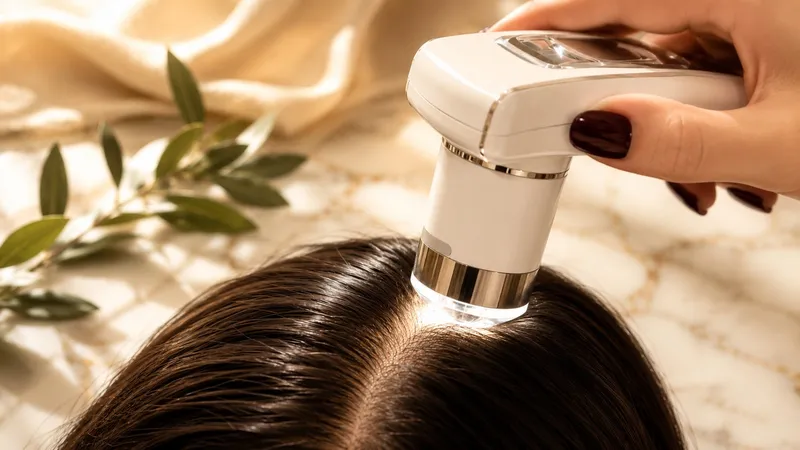
At Skin Solution Clinic, a hair fall consultation begins with a detailed history covering the duration and pattern of shedding, any recent illness, weight change, menstrual irregularity, dietary habits, family history of hair thinning, and current hairstyling practices and hair products used. This is followed by a physical scalp examination, often supplemented with trichoscopy — a handheld dermatoscope that magnifies the scalp and hair shafts to assess density, shaft thickness variation (a sign of miniaturisation), any scarring, redness or scaling, and the pattern of hair loss, all without needing to shave or cut any hair.
Standard blood panel
Based on the clinical picture, Dr. Pinky Nisha typically orders a panel that may include complete blood count, serum ferritin and iron studies, 25-hydroxyvitamin D, vitamin B12, thyroid profile (TSH, and if needed Free T3/T4), and, when PCOS is suspected, androgen levels such as testosterone and DHEA-S. Not every test is needed for every patient — the history and examination guide which tests are most relevant, avoiding unnecessary cost and blood draws.
Why self-diagnosis from the internet is risky
It is tempting to search symptoms online and self-treat with supplements or products marketed for hair fall, but many causes of hair fall have overlapping symptoms and require different treatments — taking iron tablets for months when the actual issue is thyroid dysfunction, for instance, wastes time during which further miniaturisation or shedding may occur. A proper diagnosis narrows treatment to what will actually help, rather than a trial-and-error approach with over-the-counter products.
Evidence-based treatment options and realistic timelines
Once the underlying cause is identified, treatment is tailored accordingly: correcting deficiencies with supplementation, managing thyroid or PCOS with appropriate medical therapy, and for pattern hair loss or to accelerate general regrowth, dermatologist-guided topical and, in select cases, oral therapy alongside in-clinic procedures. In-clinic options available at Skin Solution Clinic include PRP (Platelet-Rich Plasma) and GFC (Growth Factor Concentrate) therapy, which use processed components of the patient's own blood to stimulate dormant follicles — details of how these compare are covered in our dedicated PRP vs GFC article. Whatever combination of treatments is chosen, patients should understand that hair biology moves slowly: because of the natural hair cycle, visible improvement in shedding usually takes 6-12 weeks, and visible improvement in density typically takes 3-6 months of consistent treatment, with continued gradual improvement over the following months. There is no injection, tablet or procedure that produces overnight regrowth, and claims suggesting otherwise should be treated with scepticism.
Diet, lifestyle and separating myth from fact
A protein-adequate, iron- and zinc-rich diet with fresh fruits, vegetables, dairy, eggs, pulses and, where dietary preference allows, fish or meat, supports healthy hair growth as part of an overall treatment plan, though diet alone cannot correct an established deficiency or reverse pattern hair loss — it is a supportive measure, not a substitute for identifying and treating the underlying cause. Adequate hydration, 7-8 hours of sleep, and stress management through exercise or relaxation practices also support the hair growth cycle indirectly by reducing physiological stress on the body.
Common myths worth clearing up
Frequent oiling does not by itself cause or cure hair fall — massage can improve scalp circulation and feel relaxing, but oil cannot correct a nutritional deficiency, hormonal imbalance or pattern hair loss. Similarly, changing shampoo brands rarely explains a true increase in shedding, since shampoo mainly affects hair that is already on its way out and does not meaningfully affect follicles beneath the scalp. 'Natural' or ayurvedic hair oils and supplements marketed with dramatic before-after photos are not a substitute for identifying and correcting the actual medical cause, and relying on them alone while the real cause goes untreated can allow the underlying problem to progress.
When to worry and act
Occasional heavier shedding after a stressful week or seasonal change usually does not need urgent evaluation. However, hair fall lasting more than 2-3 months, visible thinning of the parting or overall density, sudden patchy bald spots, or hair fall accompanied by other symptoms like fatigue, weight change, irregular periods or scalp pain and itching should prompt a dermatology consultation rather than continued self-management, since early intervention consistently gives better results than treatment started after months of unaddressed loss.
Key takeaway
Hair fall in women is almost never unexplained — it is usually iron deficiency, vitamin D or B12 deficiency, thyroid dysfunction, PCOS, postpartum shedding, telogen effluvium after illness or crash dieting, or female pattern hair loss, each identifiable with a focused history, scalp examination and targeted blood tests. Hard water, dandruff, tight hairstyles and seasonal shedding can worsen the picture but are rarely the sole cause. Because the hair growth cycle takes months to show visible change, patience and consistency with a correctly diagnosed, dermatologist-guided treatment plan over 3-6 months gives far better results than switching between random over-the-counter products. If your hair fall has lasted more than two to three months or you are noticing visible thinning, a consultation at Skin Solution Clinic, Nainital Road, Bareilly can identify the cause and set you on an evidence-based path to recovery.
Want this looked at in person?
Consultation ₹300 at Skin Solution Clinic, Bareilly. Monday to Saturday, 11 AM – 2 PM and 6 PM – 9 PM.
Yes. Losing 50-100 hairs a day is a normal part of the hair growth cycle, as each strand cycles through growth and resting phases before shedding to make way for a new hair. This becomes a concern only when shedding increases noticeably beyond this range, when it is accompanied by visible thinning of density or the parting, or when it persists for more than 2-3 months without improvement. Tracking it with photos of your parting over a few weeks is more informative than counting individual strands day to day.
How long after childbirth does hair fall stop?
Postpartum hair shedding typically starts around 2-4 months after delivery, peaks around month 4-5, and gradually resolves by 6-12 months as hormone levels and the hair cycle re-normalise. It is a normal physiological response to the drop in estrogen after childbirth in most women. If shedding is unusually severe, does not start improving by 8-9 months, or is accompanied by other symptoms, it is worth checking iron, vitamin D and thyroid levels, since deficiency or thyroid changes can compound normal postpartum shedding.
Can hard water in Bareilly cause hair fall?
Hard water, common in Bareilly and much of the Rohilkhand region due to borewell and mineral-rich groundwater, is not usually a direct cause of hair loss but can make the scalp drier and hair feel rougher, brittle or more prone to breakage, which can worsen the visible effect of an underlying cause. Using a mild sulfate-free shampoo, rinsing thoroughly, and, if feasible, installing a water softener can improve hair and scalp condition, but the actual cause of significant hair fall should still be medically evaluated.
Which blood tests should I get for hair fall?
The tests depend on your specific history and examination findings, but commonly include complete blood count, serum ferritin (not just haemoglobin), vitamin D, vitamin B12, and thyroid profile (TSH, Free T3/T4). If PCOS is suspected based on irregular periods, acne or excess facial/body hair, androgen levels such as testosterone and DHEA-S are also checked. A dermatologist tailors the exact panel to your presentation rather than ordering every possible test, to keep evaluation focused and cost-effective.
Can PCOS-related hair loss be reversed?
PCOS-related hair thinning can be significantly improved with combined hormonal management (usually with a gynaecologist, addressing insulin resistance and androgen excess) and dermatological scalp treatment, but it behaves like a pattern hair loss and generally needs ongoing management rather than a one-time cure. Early treatment, once PCOS is diagnosed and managed, gives better density outcomes than waiting until thinning is advanced, since already-miniaturised follicles are harder to restore fully.
Does frequent oiling help stop hair fall?
Oiling can improve scalp circulation, moisturise dry hair and feel relaxing, but it cannot correct an iron or vitamin deficiency, thyroid imbalance, PCOS or pattern hair loss, which are the actual drivers of most hair fall in women. Oiling is a reasonable supportive habit alongside proper diagnosis and treatment, but relying on it alone while an underlying medical cause goes unaddressed will not resolve significant hair fall and may delay effective treatment.
How soon will I see results after starting treatment?
Because hair growth is a slow biological cycle, most patients notice a reduction in shedding within 6-12 weeks of correctly diagnosed and consistently followed treatment, with visible improvement in density typically apparent around 3-6 months. Continued gradual improvement can occur over the following months with sustained treatment. There is no legitimate treatment that regrows visibly thicker hair within days or a couple of weeks, and such claims should be treated cautiously.
Is hair fall in women different from male pattern baldness?
Yes. Female pattern hair loss typically causes diffuse thinning over the crown and a widening central parting while the frontal hairline is usually preserved, whereas male pattern baldness typically starts with a receding hairline and crown thinning that can progress to more extensive baldness. The underlying hormonal and genetic mechanisms overlap, but the pattern, workup and, at times, treatment approach differ, which is why an accurate diagnosis by a dermatologist matters.
Medical disclaimer: This article is patient education, not a diagnosis or a prescription. Skin and hair conditions often look alike and need an in-person examination before treatment. Please consult Dr. Pinky Nisha or another qualified dermatologist before starting or stopping any medicine.